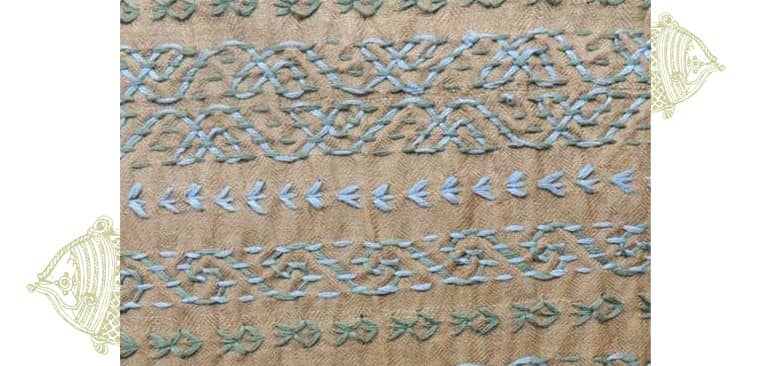
A running stitch of great beauty
Kantha comprises of the simplest stitch in the language of embroidery – the running stitch. It is the way in which this stitch is used, in different arrangements, that forms the complex vocabulary of kantha.
Originally it was used to join layers of old saris, to make quilts and was used as a means of self-expression by both urban and rural women in Bengal.
Examples of Kantha Embroidery
From rags to beautiful embroidered riches
The Sanskrit word kontha means ‘rags’. One legend links their origins to Lord Buddha and his disciples, who used to cover themselves with garments made from discarded rags that were patched and sewn together. Rags displayed at Indian shrines or tied to tree limbs symbolize prayers and wards off the evil eye. The oldest existing examples of kantha, date from the early 1800s. They are embroidered with blue, black and red threads that were unraveled from sari borders. Because they were salvaged from used garments that had been frequently laundered, the colors tend to be muted.
There are seven different types of kantha:
- Lep kantha are rectangular wraps heavily padded to make warm coverlets. The entire piece would be stitched in wavy, rippled designs over which simple embroidery was executed.
- Sujani kantha are rectangular pieces of cloth used as blankets or spreads on ceremonial occasions.
- Baiton kantha are square wraps used for covering books and other valuables. They are elaborately patterned with borders of several rows of colorful designs.
- Oaar kantha are rectangular pillow covers in simple designs with a decorative border sewn around the edges.
- Archilata kantha are small, rectangular covers for mirrors or toilet accessories with wide, colorful borders in assorted motifs.
- Durjani/thalia kantha are small rectangles with a central lotus design and embroidered borders. Three corners of the rectangle are folded inward to form a wallet.
- Rumal kantha are used as absorbent wipes or plate coverings. They also feature a central lotus with ornamented borders.
Dorokha or the double-sided kantha that has either an identical pattern or sometimes a different pattern at the back of the embroidery. So it is true reverse embroidery.
Production Process
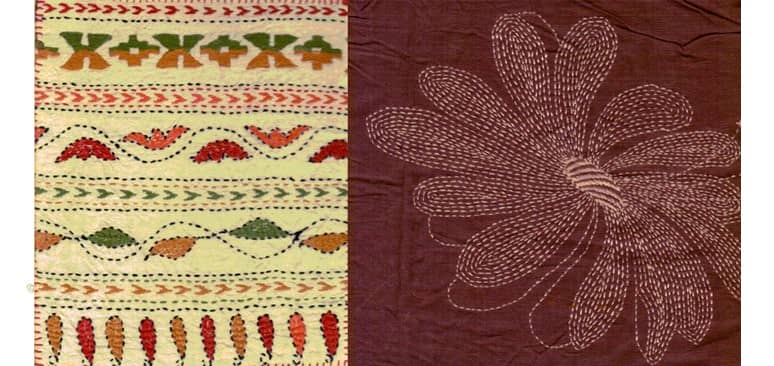
Different lines in kantha...
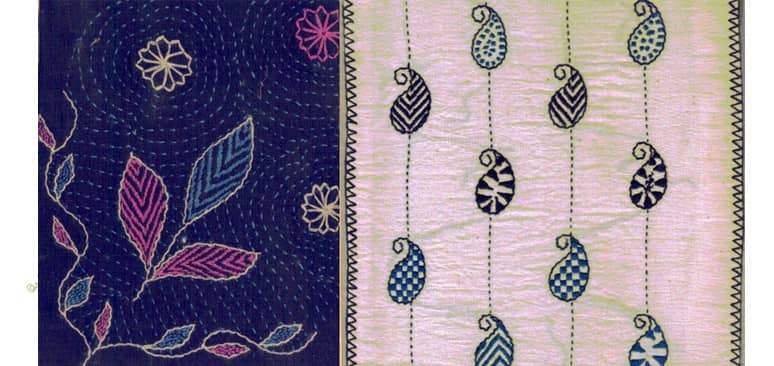
Using variations of a few basic stitches, and combining them creatively kantha expresses spontaneity and charm.
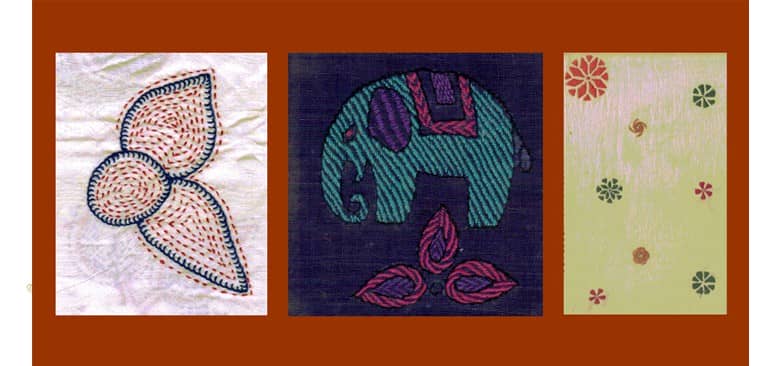
Some kantha stitches include the simple run stitch, the button hole, dhanchuri or sheaf of paddy, the cherry phool or cherry flower.
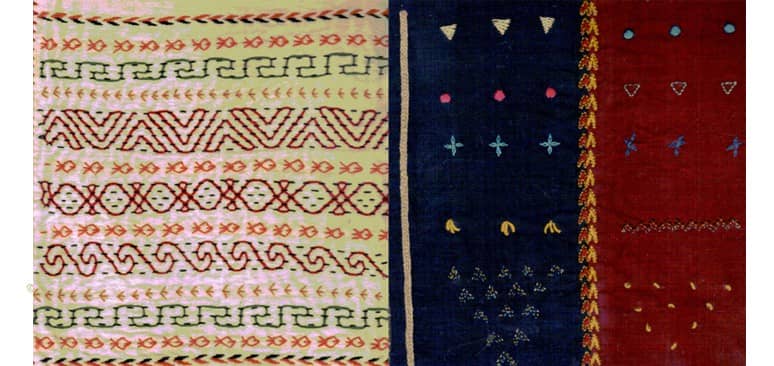
In kantha embroidery there are numerous patterns for borders as well as 'butis' or dots to fill the fabric.
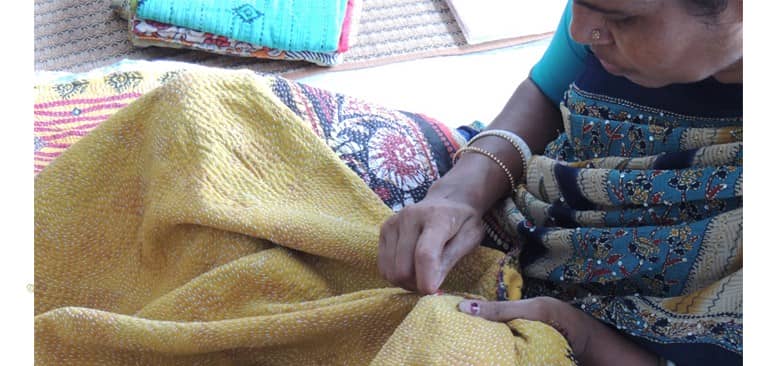
Sometimes the patterns are more abstract and are done all over the fabric, ususally to hold 3 or more layers of cloth. These patterns are embroidered free-hand without tracing. Artisans are skilled enough to stitch evenly spaced spirals or lines.
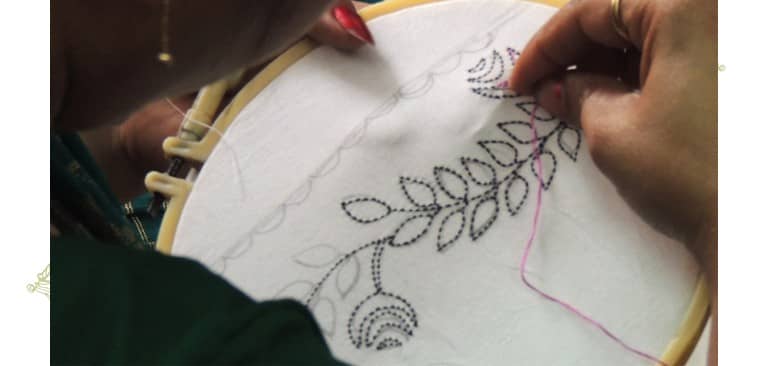
Usually a simple outline is first made on the pattern.
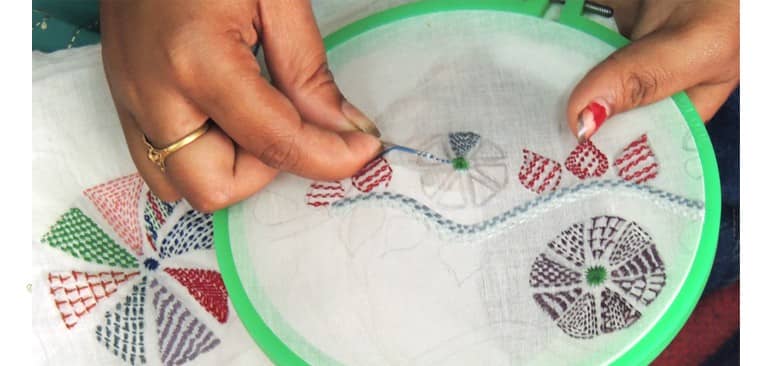
Larger plastic frames may also be used.
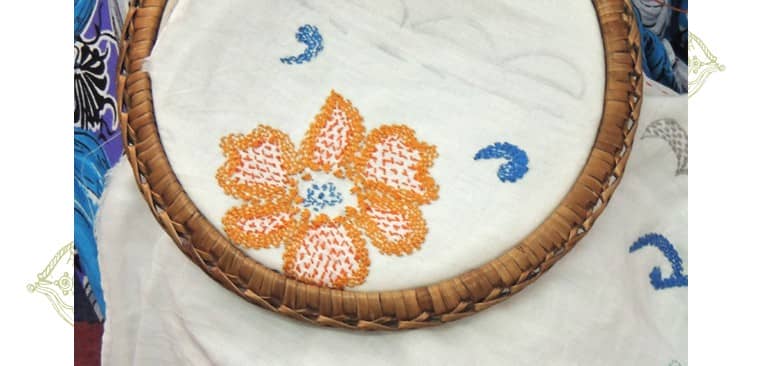
Cane frames may be used to stretch the fabric tautly.
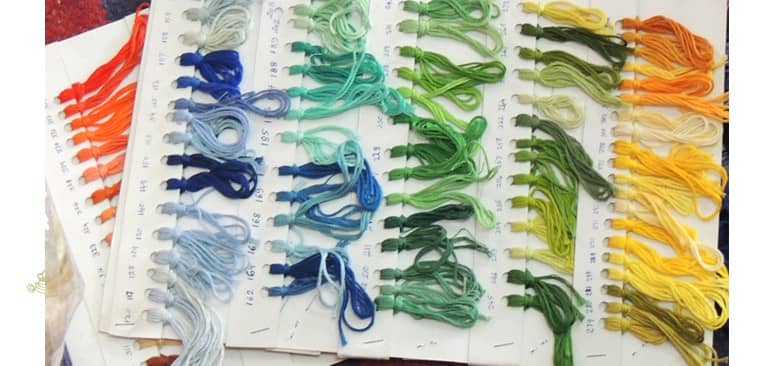
Colored embroidery threads are chosen according to the pattern. All threads have code numbers that are noted for future reference.
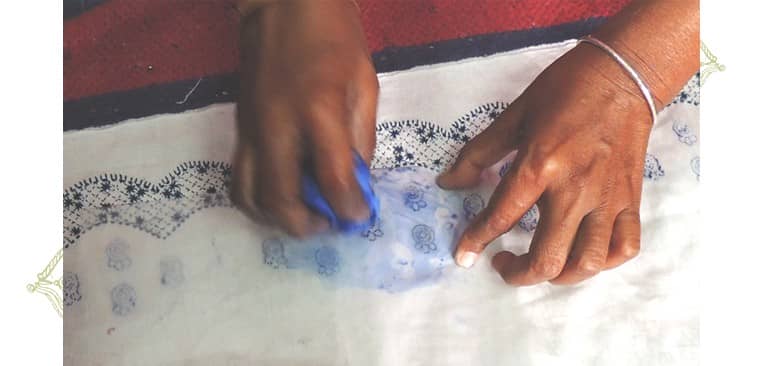
To transfer the design on to fabric, tracing paper is placed on the cloth. A liquid made with kerosine and fabric blue or white is made. This is soaked in a wad of cloth and then rubbed over the tracing paper. The liquid goes through the tiny pricked holes and so the pattern is transferred.
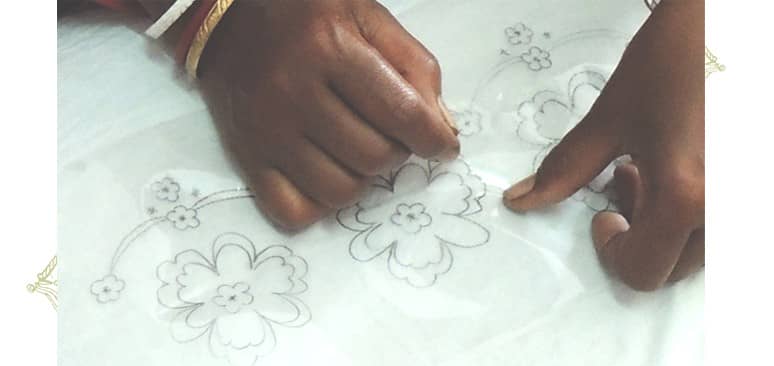
The outline is then traced on to a tracing paper. The edges of the pattern are pricked with a needle with a distance of 1 mm between each prick.
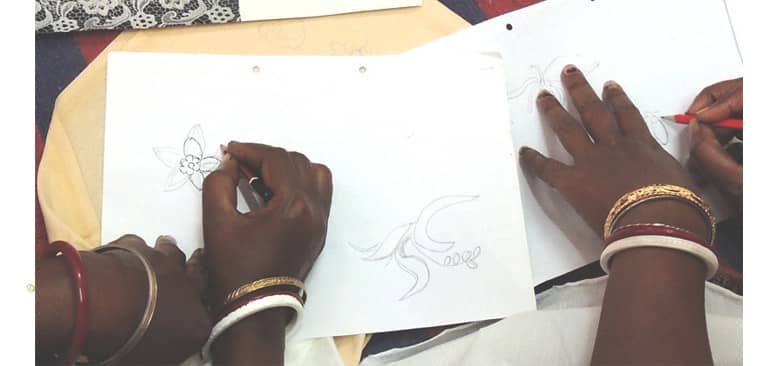
The pattern is first drawn on paper by hand.